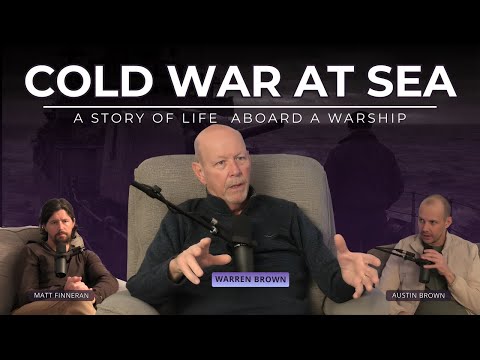
#29 From Cold War Seas To Fatherhood A Navy Story That Changed Everything
About This Episode
Warren Brown, 1981 Sailor of the Year aboard the USS Richard L. Page, shares a firsthand account of U.S. Navy life during the Cold War. From operating World War II–era fire-control systems to tracking Soviet submarines in the Atlantic, he explains how discipline and leadership turned an aging ship into a top gunfire platform. The conversation also explores hurricanes at sea, NATO operations, Guantanamo Bay, and a life-changing decision that led him to choose family over a Navy career. #USNavy #ColdWarHistory #MilitaryStories #NavalHistory #LifeAtSea #VeteranStories #Leadership #ServiceAndSacrifice #austinandmattpodcast 00:00 The Impact of a $10,000 Shift 03:10 Sailor of the Year: A Journey of Dedication 06:05 Navigating Old Technology: The Mark I Able Computer 08:53 The Challenges of Gunfire Support Training 11:46 Political Changes and Their Effects on the Navy 15:13 Cold War Tensions: Tracking Russian Subs 17:59 Guantanamo Bay: Training and Preparedness 20:51 The Cost of Military Readiness 23:48 Hurricanes and the Reality of Sea Life 27:08 The Falklands Conflict and Its Implications 30:02 Reflections on Military Service and Family Goals 33:02 Modern Navy Challenges and Observations 35:53 The Ukraine-Russia Conflict: Insights and Analysis
Topics
Full Transcript
That's incredible. A $10,000 shift in the 80s changed the course of your life. >> It did. >> Austin, you might not be here if they hadn't taken away that $10,000 about extra, right? >> No, not to be political about it, but I was in two separate Navies during the Carter years. We struggled getting spare parts. I met some Marines at gunfire support school. And so when I'm sitting there chatting with them guys, they're saying they're heading over to the beach where we're gonna actually shoot at. And it was like, man, I have a face and a name of a guy that's sitting on that beach. He's calling in for my ship to give him gunfire support, and I don't even know if my equipment's that good. That marine will never be a friendly fire incident because I'm too lazy to do my job. That's what went through my mind. Really motivated me to work on that computer. In the year 1981, as all the NATO ships gathered to prove their sea readiness and test their gunnery, the captain of the Richard El Page didn't even want to go. He was afraid that they'd be laughed out of the NATO fleet, probably kicked out and told to go back to port. What he didn't know was that first class petty officer Warren Brown was down below fixing his weapon system night and day, almost without sleep for 6 weeks. They showed up. They shot perfect marks. And a NATO fleet admiral got off of his ship onto a dinghy, went over to the Richard L page and said, "Who's the man who made this old weapon ship shoot so well?" Warren presented himself and later became sailor of the year for the Richard L page. And today we'll have him on our podcast. This is probably a page in history that wouldn't be told if it weren't for the Austin Matt podcast, but it's appropriate because this podcast wouldn't exist without him. So, to start this one off, I'd like to say I love you, Dad, and thanks for being my hero. Guys, if you like this type of content or any of the other content we put out, we'd really appreciate a like and subscribe. It's kind of a miracle that Matt and I even do this thing. We live halfway across the world most of the year. So, thanks for being here and welcome to Austin Matt podcast. Warren Brown, 1981 sailor of the year on the USS Richard El Page. Welcome to the podcast. Glad to be here. 1981 sailor of the year for the Richard El Page. What did you do on the ship? What was your role? >> So on the ship, I was back then the uh role was FTG. So fire control technician, designated guns. That was my specialty. So I had the computers and the radars and all the other equipment that went with that to control the fire of the guns. >> What What were the computers shooting the weapons on 1981 Navy ships like? >> Pretty cool. Um, the ships that I was on actually had the computer that was used during World War II. So, it was a uh uh Mark 1 Able fire control computer made by Ford Company. So, it was all electromechanical. >> Wait, they had computers on World War II ships? >> Yes. >> So, these are but they're electromechanical. They're sort of mechanical computers. >> Yeah. So basically different things would turn and they would be up against the cam and that would solve a trigonomical uh problem. >> Advanced abacuses >> basically but it was about as big as um you know it was like three washing machines kind of volumewise. So multiple guys stood around it and there was knobs and cranks on it. So you would actually have some you would have some you know physical input. So, human input into it. And then when you got everything all set up, you hit a button and that button started the mechanical part of the motor running and it sounded like a washing machine and it would run. And if you had that thing really zeroed in, it was super accurate. >> How hard was it to zero one in? Like, did you have to take panels off and go inside the computer and do some of the parts? >> I did. So, this was the second ship that I was on. The first ship I was on was the uh USS Corey DD817. Now, it had its kelaid in 1946, so it definitely had the old Mark 1 ABLE in there. And when I got on that ship, things were quite a bit out of adjustment. So, I got it all lined up once I got to the point that I could. Obviously, there's other guys there, but I really just took that on. I said, you know, I just I just need to do this. Uh, I met some Marines at gunfire support school. And so when I'm sitting there chatting with them guys, they're saying they're heading over to the beach where we're going to actually shoot at. And it was like, man, I have a face and a name of a guy that's sitting on that beach. He's calling in for my ship to give him gunfire support. And I don't even know if my equipment's that good because it wasn't up to specs for sure. And it's like I'll never be in this position again. That marine will never be a friendly fire incident because I'm too lazy to do my job. And that's what went through my mind. Really motivated me to work on that computer. Wait. So this was like a drill that you were at. It's a training. So the the Navy does naval gunfire support NGFS school. And what you do is you go to a place. We can go to uh like Bsworth Island in the Chesapeake Bay or down at uh uh Puerto Rico. Uh they have a a place down there that you can you can shoot at Vegas Island. Uh and we've done we've been to both and you practice. So you go through certain drills where the ship's cruising and you've got to they'll call it in and you've got to hit a certain target. U then there's some where the ship's going towards a target, turns sideways to the target, then turns away from the target. you can shoot at it that way. >> And the idea was there was a guy on the beach that was saying, "I pretend like you have to cover me with some fire." And you were sitting there thinking, "Well, I don't know if I shoot the weapons. I'm going to shoot the guy. I'm going to shoot in the water." >> Well, we're sure hoping not. >> Okay. And how big are how big are the shells that you're shooting? >> So, they were 55 lb high explosive rounds. Uh, so we shot a 5 in 38 caliber rifle basically is what they are. So, that's that's a pretty big size bomb. I mean, they would take a tank out, they would take anything it hits, it's pretty much, you know, goodbye. They were and and the Navy had bigger ones, you know, if we take a look at back in the old days with the like the New Jersey, Missouri, Iowa, that class of ship. I mean, those were 16inch guns. But if you see if you can think of one of those with the great big guns and you see a whole bunch of little two gun mounts, that's what the 5-in 38s were. Uh, so they were a multi-purpose round that the Navy had developed for anti-air, anti- uh ground ship to ship. So like just a utility round. So that caliber could do a lot of stuff. >> But like World War II era rounds. >> Yeah. Yeah. A lot of the a lot of the ammo we shot was actually like made during World War II. So it lasts that long if it's kept in the right places. So yeah, we were shooting up some old >> Why were you on a ship that was like World War II era in 1981? >> Well, I I Well, I was on the the page in ' 81. So from uh 77 to 81, late early 81, I was on the Corey till we decommissioned it. So that ship was decommissioned when I was on it. We sold it to Turkey. Uh so that's where it went. They still got some life out of it. I never followed I don't know how much longer. Then when I went to the page, that ship was built in the 60s, but it still had that Mark1 able computer. Um and it was it was really really good. So, it would take inputs from the gyro so that we could maintain the uh level ship. So, the ship actually kind of would rock underneath the gun. It would stay right on target. Uh and and I redid the one on the page, too. And and and it was it was on target. There was absolutely no doubt in my mind when when they pulled that trigger that round was going exactly where they told me to go. So, if there was an error, it was by them tell. So, I felt really good that whoever that marine was calling it in or whoever. >> How long did it take you from the time you got on the ship to the time you made it shoot where it was supposed to go >> on the page? I worked on that system pretty much from the time I woke up to the time I went to There was times I fell asleep with my hand inside that computer making an adjustment and I woke up, I kind of shake it off and but I did that solid non-stop for six weeks. And did you have to learn trigonometry? What what are you studying to get this computer? >> I went to school for two years to understand equipment that we were working on. And it's pretty good. You still got to be in the fleet. No matter what school you go to until you're in the fleet, uh it's just school. There's a lot of differences once you're out in the fleet. equipment's actually the same, but when you're really on a ship and it's really moving and you're really dealing with the ocean, it's different. You know, they can they can say anything they want in school, but I did so I did about uh 18 or 19 months schooling for this for this system. But that also included the radar, the radar signal processing, the target designation system, and a computer. So all the equipment that we would use was in there, but the computer was old and I thought these guys engineered this thing to be really good. And actually in World War II, they worked really well. So they worked really good all these years. By the time it was 1980, all I had to do was go through all the stuff that those engineers designed, test everything, adjust everything that need adjusting. And if in electrome mechanic computer if you adjust something uh down here then you've got to follow that through to the end because it packs everything. So you may have have to readjust it and readjust and readjust. But but I did that and then we tested it. Then when we went to sea we did some things where we would test it. Um and that that's where it really tells you can do everything you want to import. >> I want to ask you when when it came time I mean you were sailor of the year for the ship. Who who on the ship recognized that what you were doing for the ship was important? >> Well, I don't know the process they used. I just know that I got uh recognized by the captain at a you know the ship. >> But was there like a moment where suddenly the ship went from being kind of old outd? >> There were. Yes, there were. There were tons of them. Uh, and actually when we did all of our qualifications far as gunfire support, what the captain told me was our ship had scored the best in the entire Navy for that year. >> Even though you were on an old ship. >> Even though you're on an old ship. >> So we we scored almost perfect. >> And when you say you scored, were you at some sort of competition among ships? >> Well, it's not necessarily competition among ships, but they score every ship when you go to your your firing. So you do naval gunfire support where you shoot at the beach. Then you also do where they'll pull a sled. So you're like shooting at a target in the sea. And so you go through all these things and you've got to pass them to get your battle efficiency. The Navy has certain criteria. Uh the ship that I was on did not have that. We didn't pass gunfire support things. The guns just weren't that accurate. When we did when we did all this work, they were spot on. Absolutely spot on. We were in the NATO fleet towards the end of my time in the Navy and we were up in the North Atlantic doing some at sea exercises and there was an admiral in kind of in charge of that admiral or that uh NATO fleet and he came over to our ship in a little boat and came down to talk to us to congratulate us. He told me that out of all the years he had been in Navy 40ome years and he was in the uh he was in one of the NATO uh countries, Admiral. He said he'd never see uh gunfire, naval gunfire that good. So I, you know, I was humbled by it because it's like there's this big guy over in the ship and he's coming over here just to see these enlisted guys down here. He walked in the room. We're smoking and joking, slapping each other on the back because we knew we did really well. And then here comes this admiral walking in the room. That never happened. So it was like, "Oh, cool." Uh, you know, I take I give credit to the whole team. He said, "No, no, I want to know who the guy is. There's always a guy." So anyway, that's that's part of the reason they they uh did that. >> Did you ever get like Did other ships like newer ships ever come try to recruit you after you fixed? >> And it doesn't work that way. You have a detailer that sends you to different things. And I was planning on reinlisting and my new orders was going to go to one of the big new cruisers. So I was going to go to one of the most modern ships in the Navy at the time. So it was a Virginia class uh nuclear cruiser. So I already had orders that ship and I had actually went over and visited it. So I talked to the guys I would be working with. Um but you know it just didn't work out and I decided to get out. Were there any like budget issues? Yeah. I mean, just this still this idea of a World War II class ship in 1981 is kind of blowing my mind. Were Were there any like budget issues as to why they were still using ships like that? >> Yeah. Because ships cost a lot of money to build. >> Okay. >> So, they get so much life out of them. >> And on the on the on the older ship, the Corey, uh that was a reserve ship at the time. So, we did a lot of training with reserve sailors. We'd bring them on and they would do training. But even with that, the uh active navy crew still provided what we needed to do as a Navy combatant. Uh we were still able to do that, but we did a lot of training, too. So, I spent a lot of time in the Caribbean uh doing training with uh the guys that came in from different parts of the country to do their two-week training with us. >> And since you were in for six years, did you see any like uh political or cultural changes in the Navy? >> Well, surprising. You know, you'd think the Navy's always the Navy. The Army's always army. military's life is military. Uh I was in two separate navies and you know not to be political about it but I was in two separate navies during the Carter years. We struggled getting spare parts. We really weren't held to a standard that I thought we should have been. There were ships that couldn't even get underway because they were broke. Uh when Ronald Reagan took office, I mean that day, that very day, you know, it was get your ship ready and get yourself underway and get battle ready. And we did and and all of a sudden there were spare parts and we were able to bring things up. U it was a whole different Navy. So yeah, I would say yes, elections have a uh consequence that's in the military and you either support it or you're not. Uh, so I felt two different things. And you know what? I'm not saying anything good or bad about either guy. I'm just telling you what my personal experience was. Ronald Reagan, we were the Navy you could be proud of. And with Carter's administration, the Navy was sketchy. At least that's my that's what I saw being on those ships then. And I was in from 76 to 82. So I had a good feel for both of them. >> And and the I think the story is that the Russians and the Americans were in the midst of the Cold War at that time. very cold warish. >> Okay. >> Very cold warish. It was uh uh we were coming into Norfolk after being uh deployed for a little while. Uh and our sonar guys picked up this Russian sub really close to the shore of Virginia. >> And so >> yeah. And so what we did is we started tracking it. Now normally you just don't pick up these subs. Subs are even even back then subs were subs and it was hard to find them. Uh there was exercises where we never could find a dog on sub trying to but this one they picked up and we tracked it for like one day out of Gibralar. Obviously it was heading for the Med and uh we lost it then but that was a long haul to track that thing across the North Atlant or across the Atlantic almost almost to Jialter. Um, >> would they know that you're following them? >> Oh, yeah. >> Okay. They They're like, "Uhoh, we've been found." And they start tailing it out. >> My guess there was a Russian captain that wasn't treated very well for a Navy ship like that to be able to track him across the Atlantic. >> Yeah. >> But you really can't attack the sub. You don't have any like underwater missiles to out. >> Oh, you did? >> Yeah. We had two types of uh >> weapons that we could use against a submarine. The tor the ship actually had six torpedo tubes and they were they were like three in a tripod like three and three one on each side of the ship port and starboard. Then we also had what they call Azrock uh and that's a rocket assisted torpedo. So we would fire that out like a missile and it would go so far and that would separate parachute would come out the torpedo would go into the water >> drop into the water >> and then it would take off on different types of ways that it could search. Um, but yeah, we we did. Whether they would have been effective with the real thing, I don't know. I'm glad I wasn't around to find that out. >> Oh, yeah. I mean, engagement would be crazy. But basically, you kind of escorted them back to a Gibralar cuz they start leaving and you just keep following them. >> Yeah, we just keep following them. I mean, it's free ocean. >> Yeah, that's right. Anybody can do anything. >> They're going to claim they were just navigating international waters and so are we. Yeah, that was pretty cool. Uh, ships normally don't do that. That was really cool. Um, and because I was an FT, I wasn't actually a sonarman, but I did go down into the room because a buddy of mine was down there just to see how they were doing and they were killing it. He was also one of these guys that his equipment worked really well. And that's what it takes. Always takes one champion. You just got to you just got to say, I'm going to do it and do it. >> Do you know how how do they know it was a Russian sub and not a US sub? Is it >> I think by the acoustics >> of it >> because we record things. >> Got it. So they would have had a recording and >> sonar ping has a distinct signature. Probably >> the sounds that it would give off. We were we never really did ping. We just listened. >> Oh. >> So it was all passive tracking. >> And then the fact that they started running was another big hint that at least it wasn't us. >> Yeah. And because they probably did start running, they weren't like trying to be quiet. They're just trying to get their butts out of there. >> Yeah. >> Because I mean it's not like we're shooting at them or them shooting at us. Uh but it's just uncomfortable for the uh uh for that to happen. >> Yeah. >> And you know, one of the times I was in Guantanamo Bay, Cuba, the uh Cubans had these Russian built little missile boats. And as we were pulling out of Cuba, because we were still doing what they call rough trace. So we're down there going through all our training. And you do that in Cuba. We're on Guantanamo Bay. Uh we had two of these Russianbuilt Cuban missile boats. So they're like a I guess you would you would think of them as maybe a smaller patrol craft, but they had these uh I think they had two Russell two Russian missiles on them. So it was a Russian book, but but the Cubans were running them. Well, they came at us. Well, you have different types of radars. You can search radar to where you can just see things where you have fire control radar. Now you can put your fire control radar on somebody, but you're not actually tracking them, but you just see them at that radar. Well, that's one thing. But when you actually lock on to him, you can tell that. >> They can tell. >> And so can we. And so can you. And they locked on to us. >> Whoa. >> So both of them locked on to us. We went to general quarters. Uh we put live rounds up into the mount and we that's when I was on the uh the page and it was a fast frig guided missile ship and they brought a live bird on a rail. So, we went to a a situation to where you disengage or, you know, we're going to defend ourselves and and then they did. You know, there's there's timing there and they disengaged with us and then we put everything back away. But that's during Reagan's years, man. We weren't playing. >> Yeah. What kind of bird did you put on the deck? >> Uh, the missile was a I I think it was a Tarter system, so it was a standard missile. >> Okay. Okay. >> So, it could have went anti-air, anti-surface. A little dicey, I think, on anti-surface. They really were designed for anti-air, but we could have used it. >> What memories do you have of Guantanamo Bay, Cuba at that time? >> Well, for me, Guantanamo Bay was really pretty cool. Number one, you're in Cuba. Uh, it's, you know, it's, you know, the Caribbean, so it's beautiful down there. Uh, the times I was down there, the water's pretty cool. It's not that dirty. If you went to some of the bigger cities in the different islands like San Juan, Puerto Rico has a great big city and the water's kind of dirty right around it. Uh Guantanamo Bay was pretty clear even inside the bay. Uh a lot of work, a lot of cool work because you're testing everything. That's where you get your battle proficiency. Um you know, that's where you're really being a sailor. You go and test everything and you're testing it at sea and they've got guys there scoring you, making sure we're doing things right. and and we we did uh I was down at Guantano Bay three times and we were successful all three times. Um but pretty cool. The base exchange was pretty cool. Uh they had an enlistment club that was, you know, pretty cool because it's all out of the country in in Cuba. Uh but you spend a ton of time on the ship practicing. So, and it is pretty intense. So, you spend a lot of time getting ready. It does highlight how in order to be an effective military, it's just so expensive. Like just practicing, just having spare parts, keeping things up to date, man-hour, just it's it it's sort of just all charged by capital. And if you have a bunch of it, you get really powerful. And if you don't, and the other guys have more, you might be out of luck. >> Yeah. There were times uh we would actually go to the Mothball ships, so the ships that were decommissioned but just being stored in Philadelphia and take parts off them. >> Yep. >> So we needed some parts. Those were old ships, too. They had similar. So we we would uh we we always called it stealing parts off field ships, but you know they would just reallocate those parts to our ship and everything's acquisition and the paperwork all through but we would then go in there and take the parts we needed and use them. Uh I tell you what it was different when Reagan got in. We didn't have to go to the old ships. Your requisition of part it showed up and it was good. So, >> was there nowadays they talk about how sometimes there's like toilet seats that cost like $100 or something and they shouldn't. Was there any of that going on in the Navy back then? >> I'm sure there was. I was not aware of it because I was just a guy ship guy on a ship. We would put a requisition in for tools. We would get them if we would requisition for and most of the stuff we didn't go through like that. We we ke we had like the oscilloscopes and our our different testers. We kept them the whole time we were there. you know that we didn't drop them. We didn't break them. They were just good. If you did, you could get a new one. Obviously, the Navy gives you the tools you need. Um, but I didn't see that if there was uh I didn't even see the price of the different things that we have because alls we did was requisition them. Now, the guy who did supplies on a ship, I'm sure he saw that and I'm sure the ships had a budget, but that was a whole different part of the Navy than I was involved in. Since you were on older ships, did you feel like you ever got a feel of what it was like to be on a World War II ship at in rough seas? >> Well, I can tell you that Cory was a World War II ship. It was, you know, the kill was laid in 46. So, they actually started building that in 45 during the war and it took them that long to get them out. They were pumping out ships pretty quick. But I was in two different hurricanes. Um, actually, one one on the Corey and one on the page. And yeah, the I would tell you the only time I was ever afraid at sea was a ship at in those hurricanes. That is some nasty business. When I see hurricanes on TV now, I just think about the people down there. That's that's rough. That is really rough. >> Yeah. What how tall waves are you talking if you're out at sea in a hurricane? >> Oh my gosh. I mean, you could you could you could commonly see 30 and 40 footers up to 60footers. And there was times that we saw bigger than that. Uh that was much rarer though. But you're you're in 30footers all the time. And you know you you can be in 20footers on just regular times because of what it was. But man seeing much bigger than that 30 40 foot seas. Um those are some pretty big seas. Yeah. Do you have to strap in or do you have to stay on? >> Uh there was times we had to strap in to sleep. So when you went to your bunk, you you had a strap you strapped in. There was two of them went over us. Uh pretty much we had to lock ourselves on a chair somewhere so it wouldn't slide around and if you let go, you'd slide around because ship was moving pretty good. We took over a 45 degree turn or uh so the ship has two different motions it normally goes in. So it rocks left and right and then it pitches up and down. So we've had times where the front of the ship was totally out of the water. A lot of sailors have done that. We've had times where the ship's back in where the screws come out of the water and then you're rolling and we we took I don't know I think it was 47 degrees was the biggest one I was ever in. >> Whoa. >> So that's on a uh you know almost 400 foot destroyer taking about a 47 and there's guys that's done worse than that. I mean the Navy's they they get a lot done man. You know I'm not I'm very pro- Navy because I've seen what they've done. I've been at sea with them, you know, practiced with them. I we've spent a week off a carrier one time just doing plane guard where that that guy's nest back in the F-14 days. So that's Tom Cruz's uh Top Gun movie, those planes and just day and night on and off that carrier non-stop. And those guys are just uh incredible at what they do. So, just to be able to sit there and see that, it's like, man, I I always thought the Navy was uh in really good shape, especially after 80 when uh Reagan took up, we we just were we were just uh haze gray and underway, baby. You were just getting it done. And I I thought that's, you know, that's what you signed up for is to get it done. So, um it sounds like there was a lot of cat and mousing with the Soviet Union at that time. Was there any like actual missions you were sent on? Anything you had to go escort any other crews or >> not not my ships necessarily with that when we had a big war game. So about every year or two they had these big war games they name them and I can't remember the name of that one. So a Russian twler was following us you know following the the fleet. So we had this task force going out with the carrier and all sport ships and stuff. Um, you know, you would play games with that because our destroyer would cut in front of it and not really close in front of it to where there was pro an accident, but enough to where we're trying to inhibit it its ability to keep up with us and then we're faster. So, I don't know. You play games like that. I'm sure there was, especially submarines. Uh, not so much in the surface navy that I was in. We just were out there doing >> When was the Faulland Faulland Islands? >> Faulland Islands was when I was in. Uh, so that happened in I think either I think it was late ' 81 when we were part of the NATO fleet and actually we were dispatched because we were in the North Atlantic. The HMS Arrow was the British ship that was attached to the and the next morning when we got up it was just gone. She goes, "Oh, where's the arrow?" And then we heard about Faulland's and it was dispatched to go down there and fight. So during our time with them, so I knew some of the guys on that ship. So I'm thinking, man, that's crazy because the Argentinians at that time had these French exoset cruise missiles that were deadly anti-hship missiles. And at the time, a lot of ships did not have what I would consider really good anti-missile defenses. Like today, they they were just coming out with that failins gun during that time and different sea sparrows that every ship could carry to do it. So I think the Navy's much more prepared than we were back then to be able to deal with like a a cruise missile. Um so that then the the NATO fleet got dispatched and we were going to go quote unquote monitor. Well, when they launched that first exet cruise missile, they had a pretty decent range. So we stopped uh they stopped us just north of the equator. So, we were almost ready to cross the equator and they stopped us because they didn't want us to go down there. They decided, I guess politically, it was not in our best interest to have all these NATO nations ships down there. This was a British Argentinian fight. If they would have accidentally sent a exet cruise missile, if we would have been like five or six hundred miles from there monitoring, you know, that could have caused some issues. That's what we were told. Uh you you you have you don't know. It's a need to know basis. >> Yeah. And the ship that I was, you know, when I was thinking about staying in the Navy and reinlisting, the ship that I was on was actually the first ship in Beirut in ' 83 when the Marine barracks was bombed, if you remember that in history. And that ship was there. So that's a that's a really uh black time for us because we had a barracks over there. It was a big building. A lot of Marines and sailors were in there and and they bombed that uh barracks and a lot of a lot of our guys got killed and injured. And during that time, the Navy ship that I was on, because I still had friends on that, they they just were doing gunfire support for days trying to keep them from they they responded and kind bombing that barracks. That was uh one of the first times that I I saw our military, other than like the wars in Vietnam and Korea and World War II and whatever, you know, get a big black eye from somebody coming in there and killing a bunch of our guys. And that's just not something that's uh easily stomached by anybody in the service. We obviously wanted to get back at them. and uh that ship that I would have been on did a ton of gunfire support and so that would have been my job there. So I'm thinking well you know if it was meant to be I'd have been there but it wasn't meant to be. So I'm home reading about it. >> Yeah. Well and when you talk about how every there needs to be a guy who's the champion of each station of a of >> it seems to work that way. >> Yeah. In life in general it makes me wonder why weren't they able to retain you? Because I know it's in any endeavor it's hard to retain talent. Fair question. You know, when I when I was in, I really liked it. Um, I really enjoyed military. You know, I was not one of those guys where, oh my gosh, I'm can't the days I can't wait to get out. It was like pretty cool. I had a good time. I made the best of it. I enjoyed all every all all this different things. And the little things like inspections and stuff like that, that's just a minor task. Never really bothered me. Uh, keeping my haircut, whatever. You know, hair will grow or it won't grow or whatever. But now I don't have to worry about it, right? So it doesn't it didn't those kind of things didn't bother me. >> Making sure my my uniform was crisp and clean. That's just one of the tasks to do. But the job the job you're doing, man, it was well worth all that stuff. Uh so I'm getting ready to reinlist and I already talked to the detailer. I'm going to go to this cruiser which was a big ship. I really like the destroyers. I'd been on two. I've been on a fast frig. It was same about the same size as destroyer just a different designation than I was on the Cora destroyer. So, I like those smaller ships. So, but I I was willing to go ahead and take a whatever they wanted me to do with this cruiser because it was like, you know, the tip of the sword, this big cruiser. >> Bunch of new tech as well. >> All new tech. Everything new. A lot to learn, a lot of new challenges, but I I was really jacked about it. Uh, so when I talked to him about reinlistment, they offered me a certain bonus. So it was like um oh I think at the time seems like it was going to be like $14,000. Well in ' 82 $14,000 pretty good piece of change. >> So I'm going to reinlist. You're going to give me 14 grand >> and then I I do another six years and you know then you got your career going. Um so three days before I was going to reinlist they told me well we're not doing 14,000 we're going to do 4,000. I was like, "Well, let me think about this." Because my plan was I take this $14,000 and I buy a house. Then I rent that out. There was people here and, you know, my mom and dad would have actually taken care of it. They were up for go ahead and be in the landlords. So, I buy this thing and we keep it nice. We helped pay for it with the uh 14,000 plus rent and you know I get out of the Navy I got a house and the Navy helped me pay for it. Uh when 4,000 I was like you know one of my goals in life I always wanted to be a dad. Big goal in my life be a dad. So I'm thinking you know I had six years in uh I seen a lot of unsuccessful family situations in the military. >> How old were you at this time? I got out when I was 26. >> Okay. >> I went in at 20. >> So, this is 26 and you're about to reinlist for six more up to 32. Got it. >> So, I'm sitting there, you know, do I want to park? I was already sitting on the fence reinlist because I, you know, I like what I was doing. It was really cool. I also knew I was going to have to go to a shore duty. Not really keen on shore duty. So, it was like, okay, going to get I'll get a good three years in on this cruiser and then I'll have to go to do a two or three year shore duty. then I can go back on a ship. Um 14,000 4,000. I really wanted to be a dad. How much success am I going to be able to do this when we're being deployed all the time? So when I weighed it all out, you know, the old Franklin decision-making pros and cons, it was like, you know what? I'm not going to give up my goal. I'm going to go ahead. I'm going to get out. I'm going to see if I can't start a family, accomplish goal, be a dad, do the best at that I can do. Uh, Uncle Sam will do just well without me. They won't even miss me. But, but for me, uh, that really was that that was the that was the straw on the camel's back that made my decision. So, I got out. >> That's incredible. A $10,000 shift in the 80s changed the course of your life. >> It did. >> Austin, you might not be here if they hadn't taken away that $10,000 extra, >> right? >> Yeah. Because I was I was committed to That's crazy. I was committed to it. And to think the reason I wanted the house, >> which family, sure. >> So, I was just being one of those plan of headers. I thought, yeah, I can do this. You know, you when you're young, you can do it all. I thought I could do it. Uh, then when it came down, push came to shove, it was like, well, this probably a good awakening. I'm probably glad I didn't do that. House probably wouldn't have worked out. I probably wouldn't have done that and my family would have been put a hold where maybe it didn't happen. I want to ask you, have you have have you kept up with the Navy at all? I keep up on it regularly. So, what are your thoughts in modern day Navy? Overall, I think the Navyy's in pretty good shape. I think the procurement process in the Navy is actually terrible and I think they need to get their heads out of their admiral asses and start being good business people. They've been trying to build this FFX or this new fast frigot to play this intermediary role so that the early Burks can go out there and do their job and they're still struggling with it because of the procurement problem is so difficult. If large corporations can pivot and react to markets, how is it the smartest men that we can push through the military can't do that to get a new ship built? And I I I watch a lot of videos. I keep up on the Navy, uh, the different things that they're doing, uh, all the stuff that they're doing, the new the new ships that are out, the updates that they do, the aircraft that are out, the different missiles they use, because it's just, uh, you know, it's like a hobby. I just like to keep up on them. Uh, different ships are deployed. Like, I've been really really buried in the TV about this stuff going down there to Argentina and the task force they have down there, that carrier task group. Uh, I mean that is nothing to play with. That that is that is nothing to play with. That is some serious business down there. Um, >> I'm not familiar. What's the situation in Argentina? >> Well, the government's been uh sinking these uh fast boats that are carrying drugs. >> Oh, you're talking about Venezuela. >> Venezuela. Yeah. Venezuela. >> I'm sorry. Argentina. I'm still thinking back there at the Faullands. >> Yeah. Right. Right. Right. >> Venezuela. Yeah. And that's serious business. And I would hate to see us go put guys in harm's way because we can't come to a resolution on that. But these guys are prepared. Today's Navy is um prepared. You know, everything I see, man, these guys are they're doing it. >> Do you do you have a sensation that when when Trump came in, it was another Reagan Carter versus Reagan type of moment? >> Well, it sure did look like it to me. >> Yeah, >> it sure did look like it to me. Although they still had a really good preparedness because Trump's four years now, I think the eight years of Obama, it really looked like we weren't uh I don't the the ships weren't doing we weren't as prepared >> as competitive maybe as what they were. So elections have consequences, policy has consequences. The thing about is just like when I was in the Navy, if they would have told us to go to war in the middle of Carter's time, we would have went. Would we be as prepared? Would our chances of success be as good? I don't I don't think so because some of the stuff didn't work that well. Can I ask you about the situation in Russia and Ukraine? >> Yeah. >> What do you What do you What does that look like to you with your history and all the things that you look into? What does it look like going on over there right now to you? Does it look like Ukrainians stand a chance? Is the fight almost over? Is it going well for the Ukrainians? >> Well, again, I I I don't know that I'm an expert on that for sure. I watch a lot of YouTube stuff. Some of the stuff I watch was actually comes from all sorts of different sources, too. Not just one source. A lot of different sources. Russia's been in there three years. They were supposed to be the number one competitor against the United States. And you know, you take a look at what we had to do in Afghanistan and how long it took. Now, did we have 100% effort? You know, when we first went into Iraq, that was a military at its best. And we we took it apart fast and we took it apart pretty much completely. Uh Russia seems to have went in there just like we did the first time to Iraq. They didn't take it apart fast. They didn't take it apart completely. Uh it seems to me like they have failed and the number of people it's like from what I'm hearing like up to a million people lost or injured. That's that's a lot. And the gain if you take a look at the map in the last two years they really haven't gained much. You're talking yards. So Ukrainians are either um the total world badasses of all time or Russia's kind of like in a Carter military. They just weren't ready because they're just they're just not being able to beat them completely and totally. Uh they certainly are causing a lot of trouble and try a lot of deaths. Now we're seeing a whole new type of battle that I've been watching all these drones. And you know during this time Ukraine's been kind of hamstringed it in that they weren't able to launch into Russia up until recently. Well, that's kind of like a fight with one arm because I'm always on the defensive. I'm only fighting in my backyard where if we take it to them, we actually can hurt their supply. we can hurt some of their infrastructure and some of their ability to make war. So I think and as long as the West keeps pumping military assets into Ukraine, man, the Ukrainians seem to really be alltogether. I I couldn't make a call on it because I'm certainly not in depth. But from what I'm seeing, I got to give the Ukrainians a ton of credit, man. They have really stepped up, I think. And Russia's why' they even go in there? That's that's a political thing that I I don't understand. I know NATO NATO's on their backyard and they don't want to have that happen. Uh they got a weak US at the time, so they think they can make that move. So, I don't know. Uh I would say it's not looking good for Russia. If they could have, they would have. That's you know, kind of thing. Why haven't they? >> Well, thanks for sharing your thoughts that I really appreciate you coming on. And I want to get your thoughts on hear some of your story and get some of your thoughts about modern day. >> Yeah. Yeah. Because my thoughts and you know two bucks gets you a coffee at a little sideyard gift. >> That's right. That's right. >> Takes a whole 550 to get one at uh Starbucks. But yeah >> and and in the next conversation we have I want to talk about because you're talking about the infrastructure in Ukraine. Since leaving the Navy, you've become an economic developer and I want to dive into your understanding of how towns and states actually get built. But we'll leave that one for next time. Thank you, Warren Brown of the year 1981 for coming on. >> All right. Thanks. Yeah.